Writing PRDs for AI Features: What Changes and Why
by the U2xAI Team | 5 min read | July 06, 2026
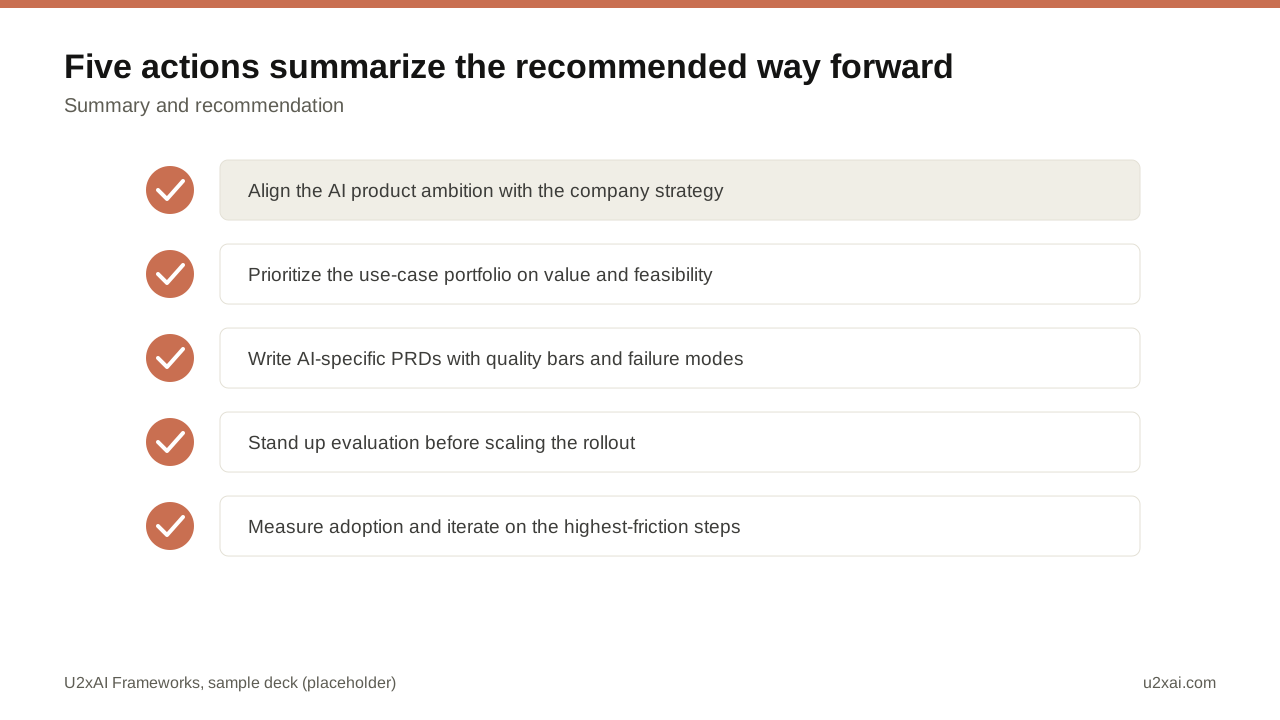
A traditional PRD specifies what the feature does. An AI PRD must also specify how well it does it, how often it may fail, and what happens when it does.
The sections we add to every AI PRD: intent coverage (which user intents are in and out of scope), quality bar (the rubric and threshold a response must meet), failure modes (the specific bad behaviors we've decided to prevent), confidence handling (what the product does when the model is unsure) and human override (how users correct, undo or escalate).
Teams that skip these sections don't avoid the decisions — they just make them implicitly, in code review, at 6pm before launch. Writing them down moves the argument to the cheapest possible moment.
Our AI Product Discovery & Requirements Toolkit ships the full PRD template with worked examples, plus evaluation rubrics and golden-set construction guides.